
On 2 November, the world commemorates the International Day to End Impunity for Crimes Against Journalists. To mark the occasion, ARTICLE 19 West Africa called for a shift from statements to action to end the impunity enjoyed by the perpetrators of these crimes. No journalist should have to pay with their life, their freedom, or their physical and psychological well-being simply because they are fulfilling a mission: to inform and uphold the people’s right to know. We have documented dozens of cases in which journalists have been subjected to serious human rights violations with impunity in Burkina Faso, Niger, Mali, Nigeria, Guinea, Togo and elsewehere, including through legal and judicial harassment. Conflicts, efforts to combat national insecurity, and political tensions must never be used as a pretext for targeting journalists.
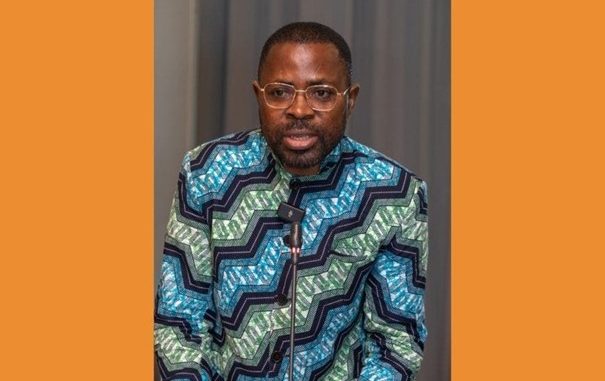
‘Behind every journalist who has been threatened, kidnapped, tortured, or murdered, there is a family living in fear, lives shattered, and a society condemned to silence. Impunity adds the pain of abandonment to the violence of these crimes,’ said Alfred Nkuru Bulakali, Regional Director for ARTICLE 19 Senegal and West Africa. ’In Africa and the Sahel, victims, and their loved ones need more than promises: they are entitled to protection, truth, and justice. We must move beyond statements and promises to put an end to impunity of those who abuse their positions to muzzle journalism’, Alfred Nkuru Bulakali added.
Journalists take huge risks to bring reliable news to the public, despite ongoing threats to their safety. Journalists who criticise authorities, investigate corruption, or report on security and democratic governance or other sensitive topics are at the most risk. Over the past 12 months, the number of cases targeteing journalists has continued to rise. We have documented dozens of cases in which journalists have been subjected to serious human rights violations with impunity in Burkina Faso, Niger, Mali, Nigeria, Guinea, Togo and elsewehere, including through legal and judicial harassment.
In Burkina Faso, Niger, Mali, and Guinea, authorities use a range of tactics to silence journalists who brave fear to ensure transparent, accurate reporting in politically unstable environments where militant clashes and operations are commonplace. These tactics include arrests and prolonged detention periods without the journalist being kept in secret locations without their family being informed about their whereabouts and without access to legal defence, enforced disappearances, arbitrary suspensions from work, forced military conscription, unfair convictions, and intimidation.
Laws on cybercrime, terrorism, defamation, security, and ‘fake news’ are commonly used to silence investigative journalists – often abusively and without any possibility of redress – and transnational repression is on the rise.
Abductions, incommunicado detentions, and enforced diseaparences
In Burkina Faso, journalists Atiana Serge Oulon and Moussa Sareba, who have been missing for more than two years without any investigation taking place, must not be forgotten.
We highlight the case of journalist Habib Marouane Camara In Guinea, who was abducted in Conakry on 3 December 2024, and has not been heard from since.
In Niger, journalist Moussa Kaka was abducted and held incommunicado for many days following the recent military unrest. No one has been held responsible for his abduction.
Transnational repression without accountability
In Côte d’Ivoire, journalist and political refugee from Togo Hugues Comlan Sossoukpè was arbitrarily arrested in July 2025 and transferred to Benin, where he remains, despite the absence of a legal reason for the treatment, and despite the fact that his health is deteriorating. The Court for the Prosecution of Economic Crimes and Terrorism is prosecuting him on vague charges of incitement to rebellion, incitement to hatred or violence, harassment via electronic communications, and glorification of terrorism in connection with his work.
In Mali, the national unit for combating cybercrime sentenced the journalist Youssouf Sissoko on March 23, 2026, to two years of unsuspended imprisonment, in connection with an article that criticised the head of state of Niger.
Weaponisation of judicial procedures
In Mali, journalist Abdrahamane Kéita was sentenced on 14 September to two years in prison for spreading false information following the publication of content regarding the security situation in Kidal. The National Cybercrime Unit Journalist sentenced journalist Chahana Takiou to 12 months in prison for criticising the justice system during a public media forum in Bamako.
In Nigeria, intelligence agents imprisoned investigative journalist Zainab Sodiq and held him incommunicado for several days in July 2026, without any legal proceedings or legal justification.
Also in Nigeria, journalist Farida Isiak was sentenced to four years in prison term and a hefty fine for defamation after she denounced on Facebook the police brutality her parents had suffered over a matter involving 100 naira (less than 10 euro cents). She was subsequently released pending a retrial following pressure from human rights organisations.
In Guinea, in addition to the alarming case of Habib Marouane Camara, who has been a victim of enforced disappearance since his abduction in late 2024, several journalists have faced retaliatory measures, including bans on practising journalism and judicial harassment. This targeting of journalists is taking place against a broader context of repression of the media and civic space.
‘When laws are exploited, it signals harmful violence against journalists’, said Alfred Nkuru Bulakali. ‘The public deserves to know the truth about these se abuses of law and the justice system and about the real motives behind these acts. Authorities must ensure they redress the damages for the journalists affected, and to see the perpetrators held accountable. It is time to end judicial harassment, ensure due process is followed, and that justice is carried out. We must protect journalists in West Africa.’
These cases and many others illustrate why we must combat impunity today and put an end to crimes against journalists.
Background
The International Day to End Impunity for Crimes Against Journalists, observed on 2 November, was established by the United Nations General Assembly during its 68th session. Member States are called on to implement specific measures to combat the culture of impunity, recognising the profound consequences it creates. The African Commission on Human and Peoples’ Rights (ACHPR) reaffirmed that freedom of expression, freedom of the press, and access to information can only be effectively exercised if journalists and media professionals are protected from intimidation, pressure, or coercion. The Commission consistently urges African states to guarantee the safety of journalists and to create an environment conducive to the exercise of their profession.
This year’s theme for the day is ‘Threats Are Evolving. Impunity Persists.’ This theme highlights the role new technologies play in transforming the ways in which attacks against journalists are carried out.
In West Africa, and particularly in the Sahel, journalists are carrying out their work under increasingly difficult and often dangerous conditions amid a broader decline in freedom of expression. Repression is no longer limited to arrests: it includes enforced disappearances, arbitrary detentions, judicial harassment, administrative retaliatory measures, and the criminalisation of online journalism.
ARTICLE 19 confirms this decline in its Global Expression Report 2026, which analyses the state of freedom of expression around the world each year. Several countries in West Africa are experiencing a marked decline; those in the Alliance of Sahel States are among the countries with the sharpest declines worldwide.
Chad and Burkina Faso are classified in the ‘In crisis’ category; Mali, Mauritania, and Guinea are listed in the ‘severe crisisHighly restricted’ category. Niger, classified in the ‘rRestricted’ category, went down10 points: one of the three largest significant declines worldwide during the period.
The 2026 RSF Report on Press Freedom echoes this concern. Niger ranks 120th, marking the steepest global decline this year.
According to the Report by the Director-General of UNESCO on the safety of journalists and the danger of impunity, 189 journalists were killed worldwide between 2024 and 2025, with 67 percent of these cases occurring in conflict zones, with impunity. The report notes that in nine out of ten cases, those responsible are not brought to justice.